Citation:
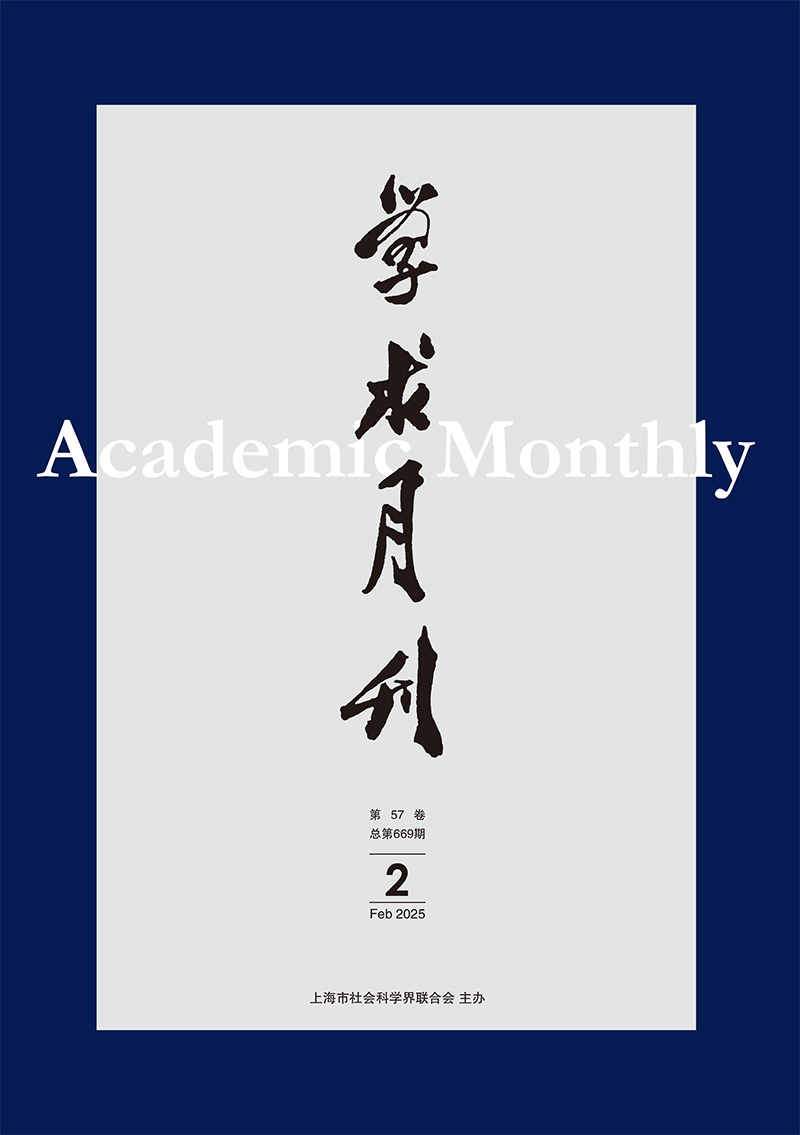
WU Xiuming. Literary Studies of the 1990s from the Perspective of “Chronotexts”—Reflections on Concepts,Significance,and Origins[J]. Academic Monthly, 2025, 57(2): 153-164.

Literary Studies of the 1990s from the Perspective of “Chronotexts”—Reflections on Concepts,Significance,and Origins
-
Abstract
In recent years,literary works from the 1990s have garnered increasing scholarly attention,becoming a new academic focal point.However,compared to the well-established body of research on 1980s literature,there remains a significant gap in the study of the 1990s.To fully capture the complexities of the 1990s literary landscape and advance research in this area,it is essential to draw on the theory of “chronotexts.” Based on this framework,the proposition of a “Revisiting the 1990s” should be put forward.This approach necessitates clarifying the logical relationships between the literature of the 1990s,the 1980s,and the literature of the new century,presenting their historical transitions and developments through an overlapping of origins,while also explaining the “foundational” significance of the 1990s literature in relation to the literary trends of the new century.
-

-
References
-
Access
-
-
[1]
YANG Rui
. Five Planet Conjunctions: Reinterpretation of the Celestial Phenomenon in 1007. Academic Monthly,
2026, 58(8): 207-216.
-
[2]
YING Qi
. Hegel's Conception of Reconciliation and the Quarrel of the Ancients and the Moderns. Academic Monthly,
2026, 58(7): 23-31.
-
[3]
ZHOU Mujun
. Between Theory and Empirical Facts: Habermas and the Sociological Debate on the Public Sphere. Academic Monthly,
2026, 58(8): 157-170.
-
[4]
ZHAO Lin
, ZHANG Boyu
, LIANG Hua
. The Relationship Between Monopoly and Innovation in Information Product Markets——A Growth Network Perspective. Academic Monthly,
2026, 58(7): 64-76.
-
[5]
LIAO Han
. Popular Religion and the Formation of Local Culture——Research on the Belief in Ge Xian'gong in Northeastern Jiangxi since the Song and Yuan Dynasties. Academic Monthly,
2026, 58(7): 195-205.
-
[6]
LU Mingjun
. Simulacra, Pattern Recognition, and Computational Formalism——Reflections on the Application of AI in Artistic Practice and Art History Research. Academic Monthly,
2026, 58(8): 41-55.
-
[7]
XU Xiangdong
. Consciousness and The Moral Status of AI Agents. Academic Monthly,
2026, 58(8): 5-15.
-
[8]
YOU Yang
. How Does AI Understand Language Meaning. Academic Monthly,
2026, 58(8): 16-28.
-
[9]
CHEN Yinchi
, WU Siqi
. Interaction and Integration between Buddhist and Daoist Hagiographies in Medieval China. Academic Monthly,
2026, 58(7): 157-169.
-
[10]
QIN Zhongliang
. Historical Views and Historical Facts: The Evolution of Perceptions of Fanzhen since the Song Dynasty. Academic Monthly,
2026, 58(7): 181-194.
-
[11]
SHEN Yifei
. Theoretical Genealogies of the Emotional Economy and the Chinese Context. Academic Monthly,
2026, 58(7): 129-142.
-
[12]
ZHANG Jun
, FANG Hongsheng
. Intergovernmental Fiscal Relations and Economic Growth. Academic Monthly,
2026, 58(8): 70-90.
-
[13]
RAN Gaoran
. The Evolution and Game of Property Systems——On the Paradigm Choice for Data Property. Academic Monthly,
2026, 58(7): 117-128.
-
[14]
LI Ming
, XU Haiqi
, XU Changtuo
. A Statistical Framework and Measurement Results for Public Finance Investing in People. Academic Monthly,
2026, 58(8): 91-105.
-
[15]
FAN Jin
. Can World Literature Be Coded——Literary Ideas in an Age of Functional Differentiation. Academic Monthly,
2026, 58(8): 171-183.
-
[16]
LIN Xifen
, FU Zhangyi
. How Does Public Trust in the Judiciary Shape Acceptability of Judges' AI-assisted Adjudications——An Empirical Study Based on Questionnaire Data. Academic Monthly,
2026, 58(8): 133-144.
-
[17]
WANG Gang
. Viewing the Cultural Intent of the “Xueheng School” from Hu Xiansu's Teachers and Friends's Group. Academic Monthly,
2026, 58(7): 206-216.
-
[18]
WEN Jun
. From Technical Tokens to Social Tokens: the Ontological Construction of Token Sociology. Academic Monthly,
2026, 58(8): 145-156.
-
[19]
ZHANG Yi
. Cognitive Transformation in Historical Research in the Age of AI——“Fluency-Induced Occlusion” in LLM-Assisted Reading of Diplomatic Manuscripts. Academic Monthly,
2026, 58(8): 29-40.
-
-


 沪公网安备 31010102003103号
 DownLoad: